

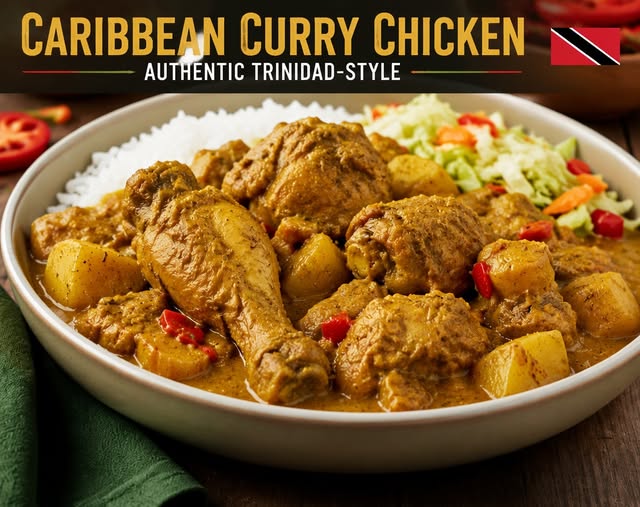
If you’ve ever sat down to a plate of Caribbean curry chicken over fluffy rice and felt like the whole world made sense — you already know what this recipe is about. And if you haven’t had that moment yet, today’s the day we fix that.
Caribbean curry chicken, especially the Trinidad East Indian style, is one of those dishes that gets passed down through generations, tweaked by every grandmother, and argued about at every family gathering. It’s bold, it’s fragrant, it’s deeply savoury, and once you learn to make it properly — you’ll never want takeout curry again.
This guide doesn’t just give you a recipe. It walks you through everything: the right cuts of chicken, the spices that actually matter, the green seasoning that sets Caribbean curry apart from every other curry on earth, common mistakes to avoid, and what to serve alongside it to make the whole meal sing.
Let’s get into it.
What Makes Caribbean Curry Chicken Different From Other Curries?
Before we dive into the recipe, it’s worth understanding why Caribbean curry chicken tastes so distinctly different from Indian curry, Thai curry, or British curry — even though the spice origins overlap.
Caribbean curry has its own identity, and it came together through centuries of history. When Indian indentured labourers arrived in Trinidad and other Caribbean islands in the 1800s following the abolition of slavery, they brought their culinary traditions with them. Over generations, those traditions blended with African, Creole, and indigenous Caribbean cooking to create something entirely new.
The result is a curry that tends to be:
- Drier and more intensely flavoured than South Asian curries, with less sauce and more concentrated spice coating on the meat
- Marinated deeply — Caribbean cooks almost always season the chicken overnight rather than cooking it from raw
- Green seasoning-forward — a herb paste made from culantro (chadon beni), chives, garlic, thyme, and pimento peppers that’s unlike anything used in other curry traditions
- Built on a burned curry base — the curry powder is cooked in oil first until it deepens in colour and aroma before the meat ever goes in
According to food historians at the Oxford Companion to Food, the movement of Indian spice culture into the Caribbean created one of the most distinct fusion cuisines in the world — and curry chicken is its crown jewel.
The Spices That Actually Matter
A lot of curry chicken recipes just say “add curry powder” and leave it at that. But here’s the thing — not all curry powder is the same, and the spice blend you use makes an enormous difference to the final result.
Chief Brand Curry Powder
If you’re cooking Caribbean curry chicken, you want Chief brand curry powder from Trinidad. It’s the gold standard across the Caribbean diaspora and widely available at Caribbean and Indian grocery stores internationally. Chief curry has a warmer, more roasted flavour profile than most generic supermarket curry powders, which tend to be blander and more yellow than flavourful.
Can’t find Chief? Betapac (Jamaican) is a solid substitute, and you can also use a good Madras curry powder in a pinch — but the flavour profile will shift slightly.
Turmeric (Separate from the Curry)
Even though most curry powder already contains turmeric, authentic Caribbean curry chicken adds extra turmeric on top. This deepens the golden colour, adds an earthy note, and carries the anti-inflammatory curcumin compounds that research published by the National Institutes of Health has linked to numerous health benefits. More reason to pile it in.
Geera (Roasted Ground Cumin)
This is a non-negotiable for the authentic flavour. Geera is the Caribbean name for cumin, and the roasted version has a smokier, more complex taste than regular ground cumin. It adds depth that rounds out the sharpness of the curry powder beautifully.
Garam Masala
A small amount of garam masala adds warmth and complexity at the back of the palate. Think of it as the finishing spice — present but not dominant.
Shadow Beni (Culantro / Chadon Beni)
This is the herb that most people outside the Caribbean substitute with cilantro — and while cilantro works in a pinch, it’s not quite the same. Shadow beni (culantro) has a stronger, more pungent flavour than cilantro and holds up to cooking heat far better. If you have access to a Caribbean or Latin grocery store, grab the real thing.
The Green Seasoning — The Secret Foundation
If there’s one thing that separates Caribbean curry chicken from every other curry on earth, it’s green seasoning. This fragrant herb marinade is the backbone of so much Caribbean cooking, and it does two things simultaneously — it seasons the meat deeply and it adds a brightness that no dry spice can replicate.
A basic green seasoning contains:
- Shadow beni / culantro (chadon beni)
- Fresh chives or green onions
- Fresh thyme
- Garlic
- Pimento peppers (Caribbean sweet peppers — not spicy)
- Onion
- A splash of water or vinegar to blend
You blend everything together into a rough paste and it keeps in the fridge for up to two weeks, which means you can batch it on Sunday and use it throughout the week. Many Caribbean households always have a jar in the fridge — it goes on chicken, fish, meat, vegetables, and pretty much anything that needs flavour.
You can adjust the ratios based on what you have available. More garlic if you want punch. More shadow beni if you want that signature herbaceous bite. Some cooks add a small piece of hot pepper for background heat.
Ingredients (Serves 6–8)
For the Chicken Marinade:
- 4 lbs chicken pieces (bone-in, skin removed — thighs and drumsticks recommended)
- Juice of 2 limes or lemons (for rinsing)
- ¼ cup green seasoning (see above)
- ½ teaspoon turmeric powder
- 1 teaspoon roasted ground cumin (geera)
- ½ teaspoon garam masala
- 1 teaspoon black pepper
- 1 teaspoon kosher salt
- 1 tablespoon Chief curry powder (added to the marinade)
For the Curry Base:
- 2–3 tablespoons vegetable or canola oil
- 4–5 cloves garlic, crushed or minced
- ¼ cup Chief curry powder
- ¾ cup water (to make curry paste)
For Cooking:
- 1 cup water (added during cooking)
- 1 medium onion, diced
- 1–2 pimento peppers, sliced
- 1 scotch bonnet or hot pepper (whole, for mild heat — or chopped, for serious heat)
- 3–4 sprigs shadow beni or ¼ cup fresh cilantro, chopped
- Salt and pepper to taste
Optional Add-ins:
- 2 medium potatoes, cubed (very traditional — highly recommended)
- 1 cup coconut milk (for a creamier, slightly sweeter version)
- 1 cup pumpkin, cubed (adds body and natural sweetness)
Step-by-Step Method
Step 1: Rinse and Clean the Chicken
Start by rinsing your chicken pieces thoroughly with lime or lemon juice and cold water. This isn’t just a cultural habit — citrus juice helps remove surface bacteria and any off-odours from the raw meat, and it also slightly breaks down the surface proteins so the marinade penetrates more deeply.
Pat the pieces dry after rinsing and place them in a large bowl.
Step 2: Marinate — and Don’t Rush This Part
Add your green seasoning, turmeric, geera, garam masala, black pepper, salt, and that tablespoon of curry powder directly to the chicken. Get your hands in there and work the seasoning into every piece, making sure every surface gets coated.
Then cover the bowl and let it sit. Minimum 2 hours. Overnight is better. 24 hours is best.
This overnight marination is the single biggest difference between a good Caribbean curry chicken and an exceptional one. The spices don’t just sit on the surface — they work their way into the meat, and the result is chicken that is seasoned all the way through rather than just on the outside.
Step 3: Make the Curry Paste
In a small bowl, combine ¼ cup Chief curry powder with ¾ cup water and stir until you get a loose, smooth paste. This step is optional — you can add dry curry directly to the hot oil — but the paste method gives you more control over the cooking process and reduces the chance of burning the spices.
Step 4: Build the Curry Base
Heat your oil in a heavy-bottomed pot or large deep skillet over medium-low heat. Add your crushed garlic and stir constantly for about 30–45 seconds until fragrant. Don’t let it brown — you want it soft and aromatic, not bitter.
Now pour in your curry paste. Stir it constantly over medium-low heat for about 30–60 seconds. This is the critical step — you’re cooking the raw curry taste out of the powder and allowing the spices to bloom in the fat. The paste will darken slightly, become fragrant, and almost start to look dry at the edges. If it sticks, add a tablespoon of water and keep stirring.
This “burning the curry” technique is what gives Caribbean curry chicken its characteristic deep, roasted flavour that you simply don’t get when you add curry to water or sauce without this step.
Step 5: Add the Chicken
Add your marinated chicken pieces directly into the curry base. Stir and toss to coat every piece thoroughly in the curry and garlic mixture. Don’t add the leftover marinade from the bowl yet — set it aside.
Cover the pot and cook on low heat for 15 minutes, stirring occasionally. The chicken will start releasing its own juices, which will combine with the curry to create a concentrated, deeply flavoured base.
Step 6: Add Liquid and Finish Cooking
Pour in that remaining marinade from the bowl, then add 1 cup of water. If you’re adding potatoes or pumpkin, now is the time to drop them in. Add your diced onion, pimento peppers, and the whole scotch bonnet (or chopped if you want real heat).
Stir everything together, bring it to a gentle boil, then reduce to medium heat. Cover and cook for another 20–25 minutes, stirring occasionally, until the chicken is cooked through and falling-off-the-bone tender.
The sauce should reduce to a thick, concentrated gravy that clings to the chicken rather than swimming in a thin broth. If it’s too watery, remove the lid for the last 5–10 minutes to let it reduce.
Step 7: Finish with Shadow Beni
Right at the end, stir in your chopped shadow beni or cilantro. Taste everything and adjust salt and pepper as needed. This final addition of fresh herb brightens the whole dish and adds that signature Caribbean freshness on top of all the deep, warm spice.
Remove the whole scotch bonnet pepper before serving if you added it whole.
Common Mistakes and How to Avoid Them
Plenty of people make Caribbean curry chicken and it comes out flat, bland, or weirdly dry. Here’s what’s usually going wrong:
Not marinating long enough. An hour isn’t enough. The green seasoning needs time to penetrate. Plan ahead and marinate overnight.
Burning the garlic. Garlic goes from golden to bitter in about 15 seconds. Keep the heat medium-low and stir constantly.
Not cooking the curry paste long enough. If you skip the blooming step or rush it, your finished dish will have a raw, harsh curry flavour. Give it the full 30–60 seconds in the hot oil.
Adding too much water too early. Caribbean curry chicken isn’t supposed to be soupy. Add liquid gradually and let the chicken cook in its own juices first.
Using the wrong curry powder. Generic supermarket curry powder will give you a generic result. Source Chief or Betapac if at all possible.
Skipping the green seasoning. Some recipes just use garlic and dry spices, which produces a much flatter flavour. The green seasoning is what gives this dish its Caribbean soul.
Variations Worth Trying
Coconut Curry Chicken
Replace half the water with full-fat coconut milk at the cooking stage. The coconut milk adds a richness and very subtle sweetness that balances the heat beautifully. This variation is especially popular in Jamaica and across the Eastern Caribbean.
Curry Chicken with Potato (Aloo)
This is probably the most traditional version across Trinidad and Tobago. Add 2 medium potatoes, peeled and cubed, along with the water in step 6. The potato absorbs the curry and becomes impossibly flavourful — many people argue the potato is better than the chicken in this version.
Curry Chicken with Pumpkin
Calabaza pumpkin or butternut squash added during cooking breaks down slightly and thickens the gravy naturally. It also adds a beautiful colour and a gentle sweetness that rounds out the heat.
Baked Curry Chicken (Oven Method)
After completing step 5 on the stovetop, transfer everything to a covered baking dish and finish in the oven at 375°F (190°C) for 35–40 minutes. The result is deeply caramelised edges on the chicken with a concentrated gravy underneath.
What to Serve with Caribbean Curry Chicken
The beauty of this dish is how many things work alongside it. Here are the most traditional and most delicious pairings:
Roti — the classic pairing in Trinidad and across the Caribbean. Dhal puri roti (layered flatbread with ground split peas) or paratha (buss up shut) are both fantastic. The roti acts as a scoop and soaks up every drop of that curry gravy.
White rice — simple, perfect, and lets the curry be the star. The ratio of gravy to rice is a deeply personal matter that causes arguments in Caribbean households.
Cilantro lime rice — a slightly elevated option that adds brightness to the plate.
Coconut rice — especially good with the coconut milk variation of the curry.
Dhal — split pea soup served alongside is a full Trini meal. Curry chicken, dhal, and rice together is called a “full plate” and it is an experience.
Fried plantains — the sweetness of ripe plantain against the heat and spice of curry is one of the great flavour combinations in Caribbean cooking.
According to BBC Good Food’s guide to Caribbean cuisine, the combination of curry with flatbread or rice is one of the most nutritionally complete traditional meals in the region, balancing protein, complex carbohydrates, and a wide spectrum of micronutrients from the spice blend.
The Health Benefits of Caribbean Curry Spices
This dish isn’t just delicious — the spice blend it’s built on is genuinely impressive from a nutritional standpoint.
Turmeric contains curcumin, which research from Advances in Experimental Medicine and Biology identifies as one of the most studied natural anti-inflammatory compounds in existence.
Cumin (geera) is rich in iron and has been shown in studies to support digestion and blood sugar regulation. A study published in the Journal of the Science of Food and Agriculture found cumin extract significantly improved markers of metabolic health.
Garlic supports cardiovascular health and immune function, with extensive peer-reviewed evidence behind it.
Shadow beni and fresh herbs add vitamin C, vitamin A, and a range of antioxidants.
Ginger (optional addition) has well-documented anti-nausea and anti-inflammatory properties.
This is genuinely functional food — rich, satisfying, and doing your body real good at the same time.
Frequently Asked Questions
Can I use boneless chicken? Yes, but bone-in pieces produce a far more flavourful result. The bone releases collagen during cooking that enriches the gravy. If you use boneless, reduce the cooking time by about 10 minutes and watch it carefully so it doesn’t dry out.
How spicy is this dish? With a whole scotch bonnet left intact, it picks up a mild background heat. If you want it spicy, chop the pepper and stir it in. If you want no heat at all, skip the scotch bonnet and stick with pimento peppers only.
Can I make it ahead? Absolutely — and it actually tastes better the next day once the flavours have had time to settle and deepen. Store in the fridge for up to 4 days and reheat gently on the stovetop with a splash of water.
Can I freeze it? Yes, Caribbean curry chicken freezes beautifully. Portion it into airtight containers and freeze for up to 3 months. Thaw overnight in the fridge and reheat on the stovetop.
What if I can’t find shadow beni? Cilantro is the closest substitute. Use about twice as much cilantro as you would shadow beni since shadow beni is more intense in flavour.
Do I need to add tomatoes? This recipe doesn’t include tomatoes — and that’s traditional for Trinidadian-style curry. Some Guyanese and Jamaican versions do include tomato, which adds acidity and a slightly looser sauce. It’s a matter of regional preference.
Make-Ahead Tips and Storage Guide
Marinating: Season your chicken up to 24 hours in advance and store covered in the fridge. The longer the better.
Batch cooking: This recipe scales up beautifully. Double or triple the quantities and freeze portions for quick weeknight meals.
Refrigerator storage: Keeps for 4–5 days in an airtight container. The flavour genuinely improves after day one.
Freezer: Up to 3 months. Freeze in individual portions for easy reheating.
Reheating: Always reheat on the stovetop over low-medium heat, adding a small splash of water to loosen the gravy. Microwave reheating works but can dry out the chicken.
Full Recipe Card
Prep time: 20 minutes (plus 2–24 hours marinating) Cook time: 40–45 minutes Total active time: 1 hour Serves: 6–8 Difficulty: Easy-Medium
Ingredients
Marinade:
- 4 lbs bone-in chicken pieces, skin removed, rinsed with lime juice
- ¼ cup green seasoning
- ½ tsp turmeric
- 1 tsp roasted ground cumin (geera)
- ½ tsp garam masala
- 1 tsp black pepper
- 1 tsp kosher salt
- 1 tbsp Chief curry powder
Curry base:
- 2–3 tbsp vegetable oil
- 4–5 garlic cloves, crushed
- ¼ cup Chief curry powder + ¾ cup water (for paste)
Cooking:
- 1 medium onion, diced
- 2 pimento peppers, sliced
- 1 scotch bonnet pepper (whole)
- 1 cup water
- 4 sprigs shadow beni or ¼ cup cilantro, chopped
- Salt and pepper to taste
Method
- Rinse chicken with lime juice. Add all marinade ingredients, mix well, cover and refrigerate for at least 2 hours or overnight.
- Mix curry powder and ¾ cup water into a smooth paste.
- Heat oil in a large heavy pot over medium-low. Add garlic, stir for 30 seconds.
- Add curry paste, stir constantly for 30–60 seconds until darkened and fragrant.
- Add marinated chicken, toss to coat thoroughly. Cover and cook on low for 15 minutes.
- Add reserved marinade from bowl, 1 cup water, onion, pimento peppers, and scotch bonnet. Stir well.
- Cook covered on medium heat for 20–25 minutes until chicken is cooked through and gravy is thick.
- Stir in shadow beni or cilantro. Taste and adjust seasoning.
- Remove whole scotch bonnet before serving. Serve with roti, rice, or dhal.
Caribbean curry chicken is the kind of recipe that rewards patience. The overnight marination, the careful blooming of spices in oil, the slow cooking that lets the chicken absorb everything around it — none of it is difficult, but all of it matters.
What makes this dish truly special is how it carries centuries of history in every bite. It’s Indo-Caribbean, Afro-Caribbean, Creole, and something entirely its own — a dish that could only have been born in the Caribbean and that belongs to everyone who grew up with it or discovered it and immediately understood why people love it so deeply.
Make it once and it’ll be in your regular rotation. Make it twice and you’ll start tweaking it — adding your potatoes, adjusting your heat level, reaching for that extra shake of geera — and before you know it, you’ll have your own version. That’s exactly how it’s supposed to work.





No comments yet.